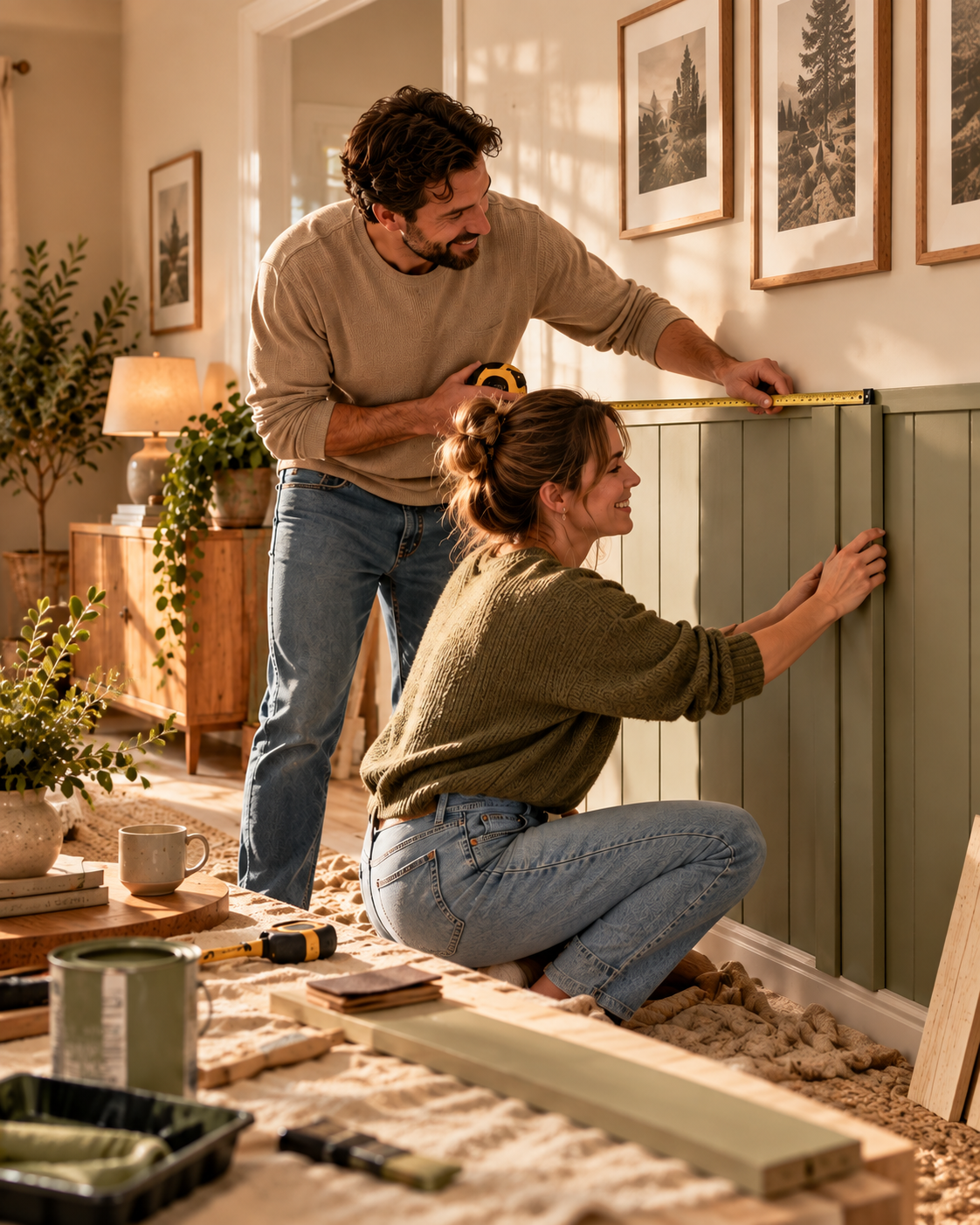
New skirting and architrave can make an ordinary decorating job feel like a proper renovation because they sharpen every edge in the room.
The trick is accepting that walls and corners are rarely perfectly square. Measure each run, understand which joints are internal or external and dry fit before fixing.
This guide is for decorative internal trim. If removal reveals damp, unsafe wiring, damaged structure or another underlying problem, deal with that before covering it again.
Tools
What you’ll need to do the job.
- Tape measure
- Pencil
- Square
- Mitre box and saw or suitable mitre saw
- Coping saw where required
- Spirit level
- Pipe and cable detector
- Caulking gun
- Filling knife
- PPE appropriate to cutting
Materials
What you’ll need to build it.
- Skirting and/or architrave
- Grab adhesive suitable for the substrate
- Appropriate mechanical fixings where required
- Wood glue for suitable joints
- Wood filler
- Decorators caulk
- Primer and finish paint if using unfinished trim
Step by step
Do it in this order.
Measure every wall and opening
Record the actual lengths and identify internal corners, external corners, door openings and obstacles. Add a sensible waste allowance for cuts and mistakes.
Check what is behind the fixing line
Use a detector and understand where services may run before drilling, nailing or screwing. Never assume a low wall zone is service free.
Plan the joint sequence
Decide where mitres, scribes/coped joints and straight joins will land before cutting the first long length. Keep awkward joins away from the most visible positions where possible.
Cut and label pieces
Measure each run individually and mark the back of pieces as you go. Dry fit corners before adhesive or fixings make the decision permanent.
Fix without forcing crooked walls straight
Use an adhesive/fixing method suited to the wall and trim. Pull the board neatly to the wall, but do not introduce obvious bows by forcing it against severe irregularities.
Fit architrave from consistent reveals
Around a door lining, set a consistent reveal rather than placing the architrave randomly at the edge. Check the head piece before final fixing.
Fill rigid defects and caulk flexible edges
Use filler for pin holes and suitable rigid imperfections. Use decorators caulk sparingly at small wall to trim gaps that need a flexible paintable finish.
Prime and paint as a complete trim system
Seal raw edges where required and finish the trim according to the coating instructions. Sand repairs before the final coats.
Things we’d do
Small choices that make the job better.
- Keep a small offcut of the actual profile for testing corner cuts.
- Measure long walls in more than one place before assuming they are straight.
- Pre prime awkward raw edges before fitting if access will be poor afterwards.
- Label every cut piece on the back; rooms become confusing surprisingly quickly.
Things we wouldn’t
Common shortcuts that usually cost you later.
- Cutting the whole room from one set of assumed dimensions.
- Using caulk to disguise very poor joints.
- Fixing without checking for hidden services.
- Forcing badly bowed trim onto an uneven wall without understanding what the finished line will look like.
Before you start
Know where DIY stops.
- Use suitable eye, hearing and respiratory protection for the cutting method.
- Check for hidden pipes and cables before drilling, nailing or screwing.
- Support long lengths safely and follow saw manufacturer instructions.